Portland Outdoor Explorers is place-based and child-led. This means that our activities and lessons are based on our learning environment and our students’ passions. Every student learns differently, and our lessons are planned around individual learning styles.
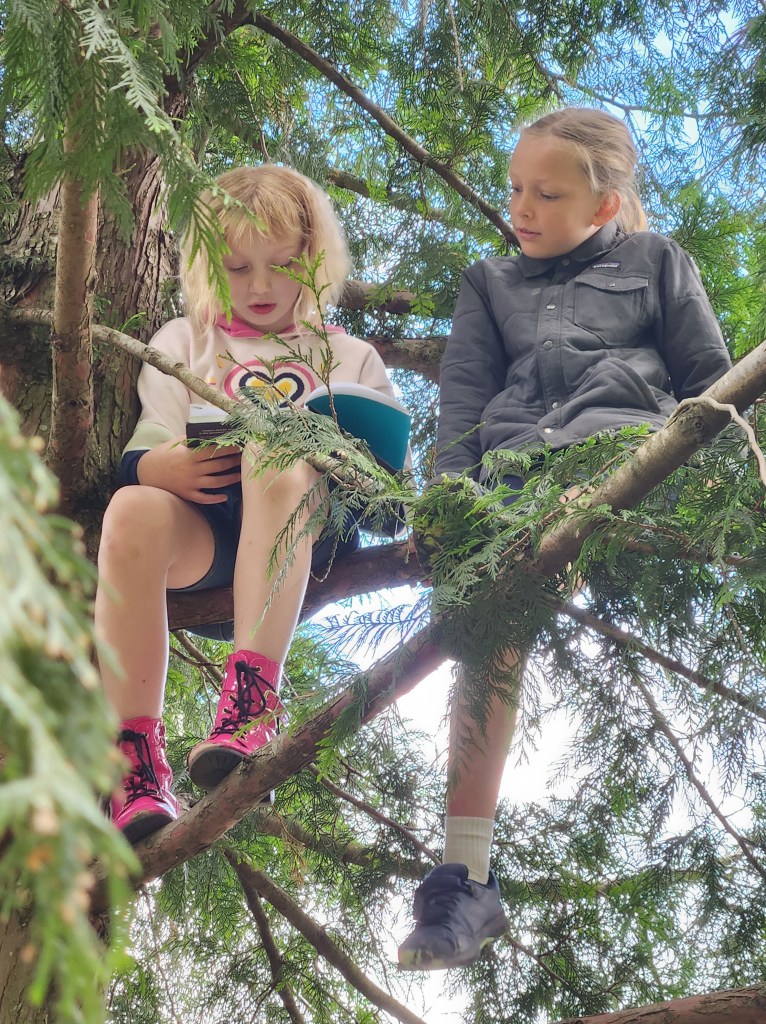
A Holistic Curriculum
Just like how everything in nature is connected, our curriculum is based around the idea that each lesson is part of a greater whole.
Fine Motor Skills
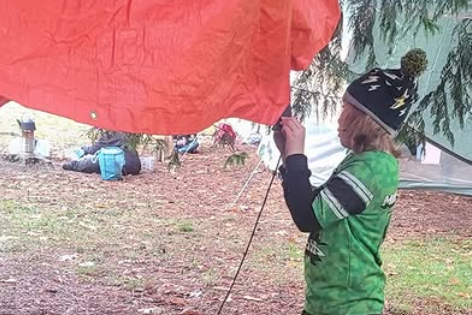
Fine motor skills are the use of the hands and upper extremities to reach, grasp, and manipulate objects. They also involve visual motor skills, or hand-eye coordination, which is the ability to coordinate the hands, legs, and the rest of the body. At POE, one of the many ways we exercise our fine motor skills is using knotwork to tie down tarps for shelter-making (one of our main outdoor activities).
Gross Motor Skills
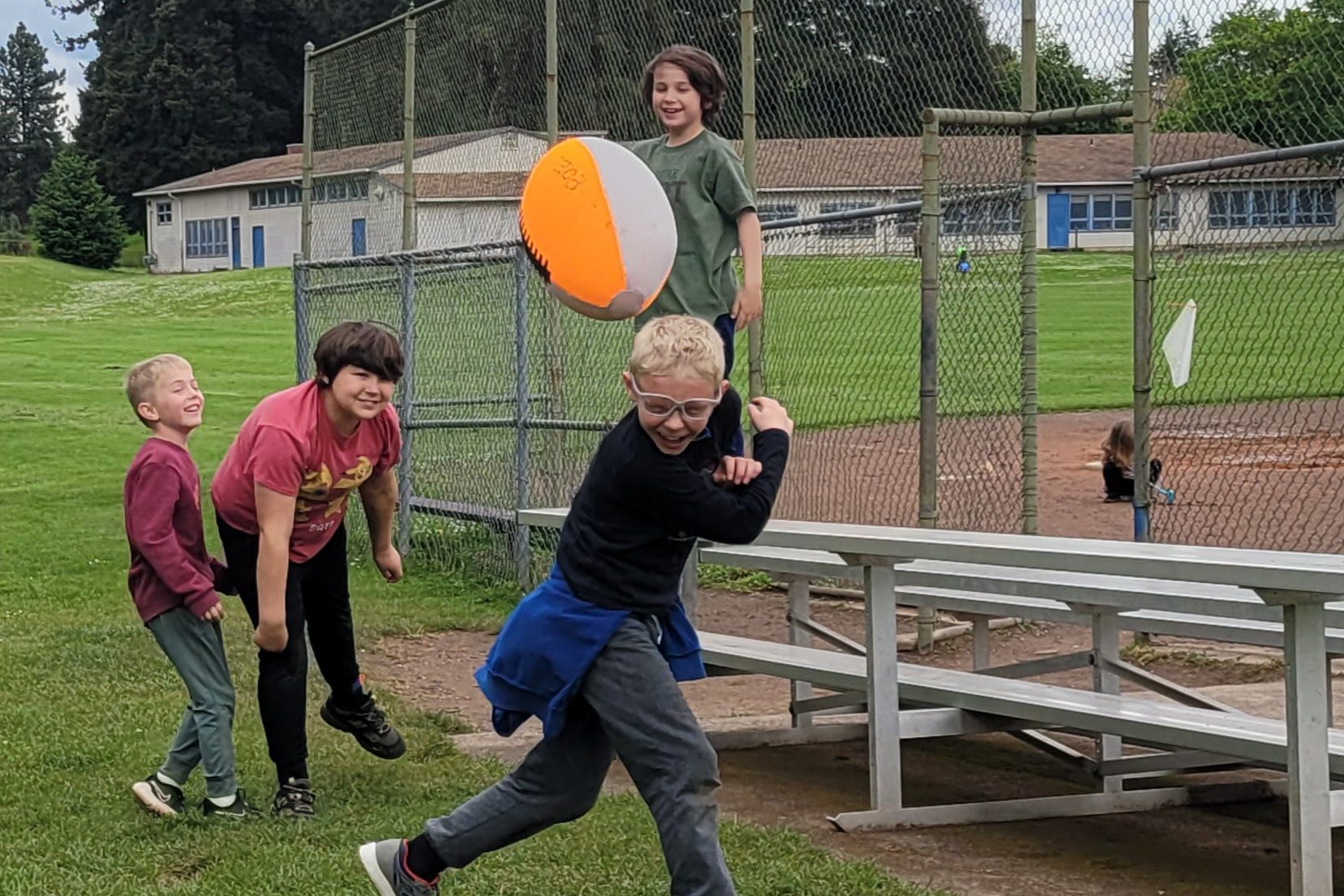
Gross motor skills are the abilities that involve the large muscles in the body to perform physical activities, such as walking, running, and jumping. They are important for mobility, hand-eye coordination, and overall health. At POE, we test and grow our gross motor skills daily with field games, foam sword battles, foot-races, obstacle courses, archery, and (plastic) axe throwing.
Dramatic Play
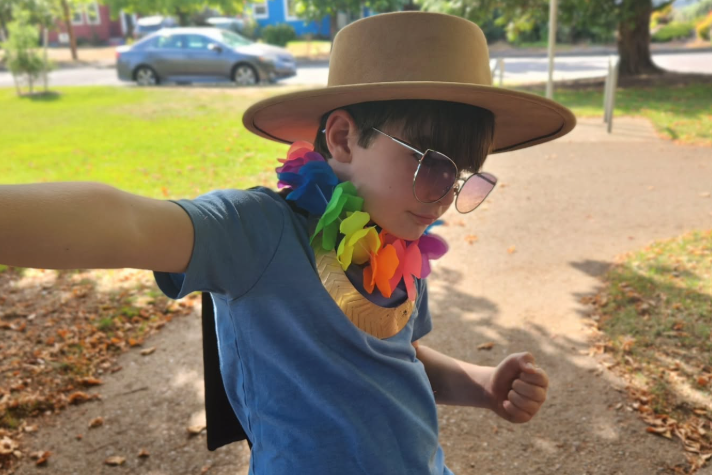
Dramatic play, also known as pretend play or role play, is a type of symbolic play where children act out scenarios and take on different roles. It can involve using real or imaginary objects to represent other real or imaginary objects.
When dramatic play is shared with others, it becomes sociodramatic play. Sociodramatic play can involve the use of props, costumes, and scenery, but it’s not a requirement. Portland Outdoor Explorers provides a variety of costumes for dress-up activities, live-action role playing, and more.
Social and Emotional Development
Social and emotional learning (SEL) refers to the process of developing skills that allow individuals to understand and manage their emotions, build positive relationships, make responsible decisions, and achieve personal goals; essentially, it encompasses the ability to be self-aware, self-regulate, and interact effectively with others, crucial for success in school, work, and life in general. At POE, one of our favorite ways to grow social and emotional skill is to play D&D and LARP. These activities require us to play a role, but also require a LOT of communication, planning, and teamwork.
We also work on checking in with ourselves and others to determine if we need space for our bodies in the Calm Down Space or if we need to apologize for accidently hurting someone’s feelings or body. After all, empathy is a learned skill.

A Connection to Nature
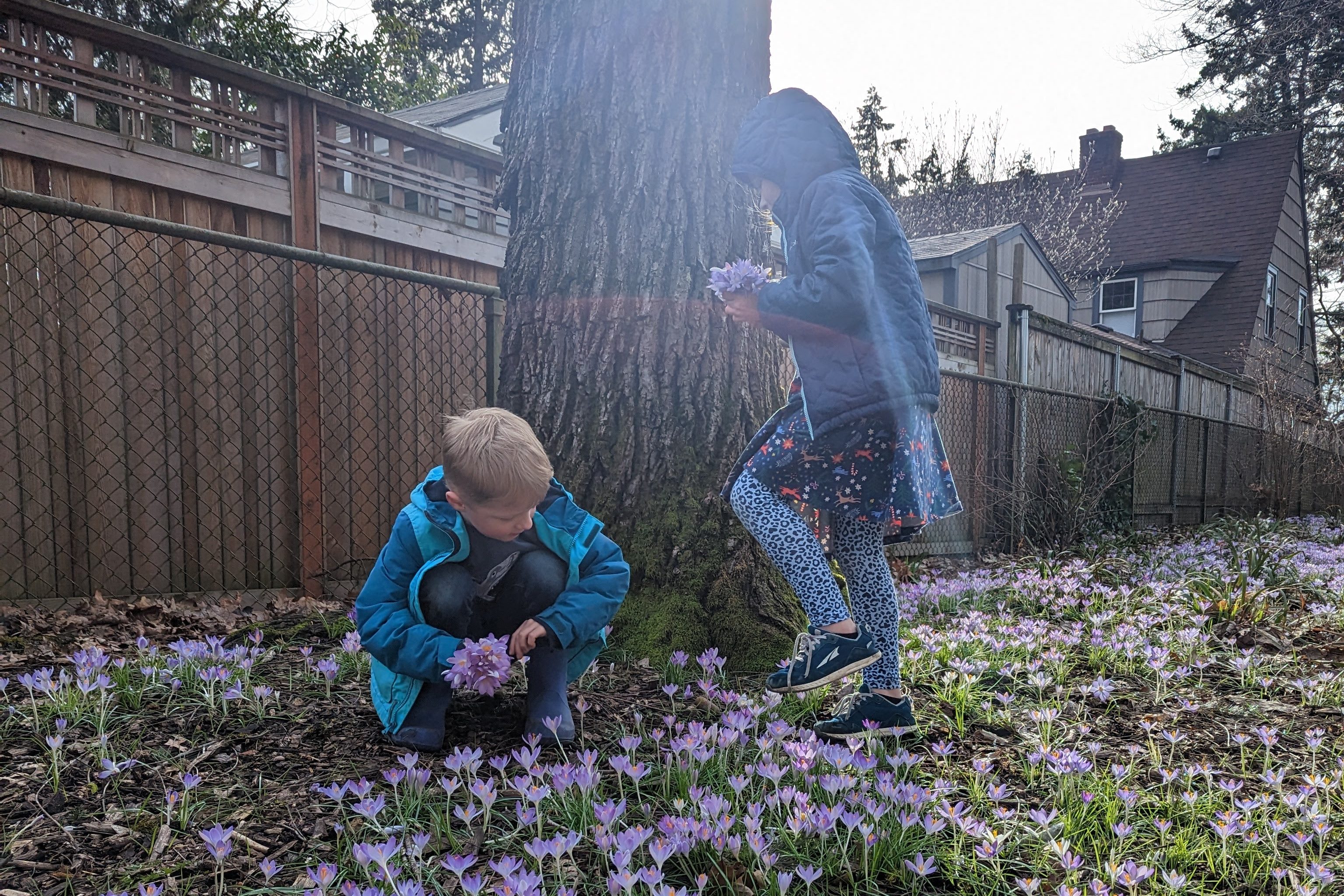
Studies have shown that spending time in nature can help to alleviate depression and anxiety, lower blood pressure and stress, improve sleep, boost creativity, energy, and concentration, and improve the immune system. At POE, we endeavor to limit technology and spend as much time in the great outdoors as possible. We believe that there is no bad weather, only bad clothing. Through conservation activities, learning trail signs, survival skills, stewardship, foraging, and other bushcraft activities, we foster a love and understanding of nature with our students.
Arts, Crafts, and Creative Development
Creativity isn’t limited to artistic endeavors like art, music, craft, writing and drama and it’s definitely not only about a physical outcome. Creativity can be defined as the journey through which we use and develop our imaginations, originality, productivity and problem-solving abilities.
The same principle applies to creative expression in early childhood learning.
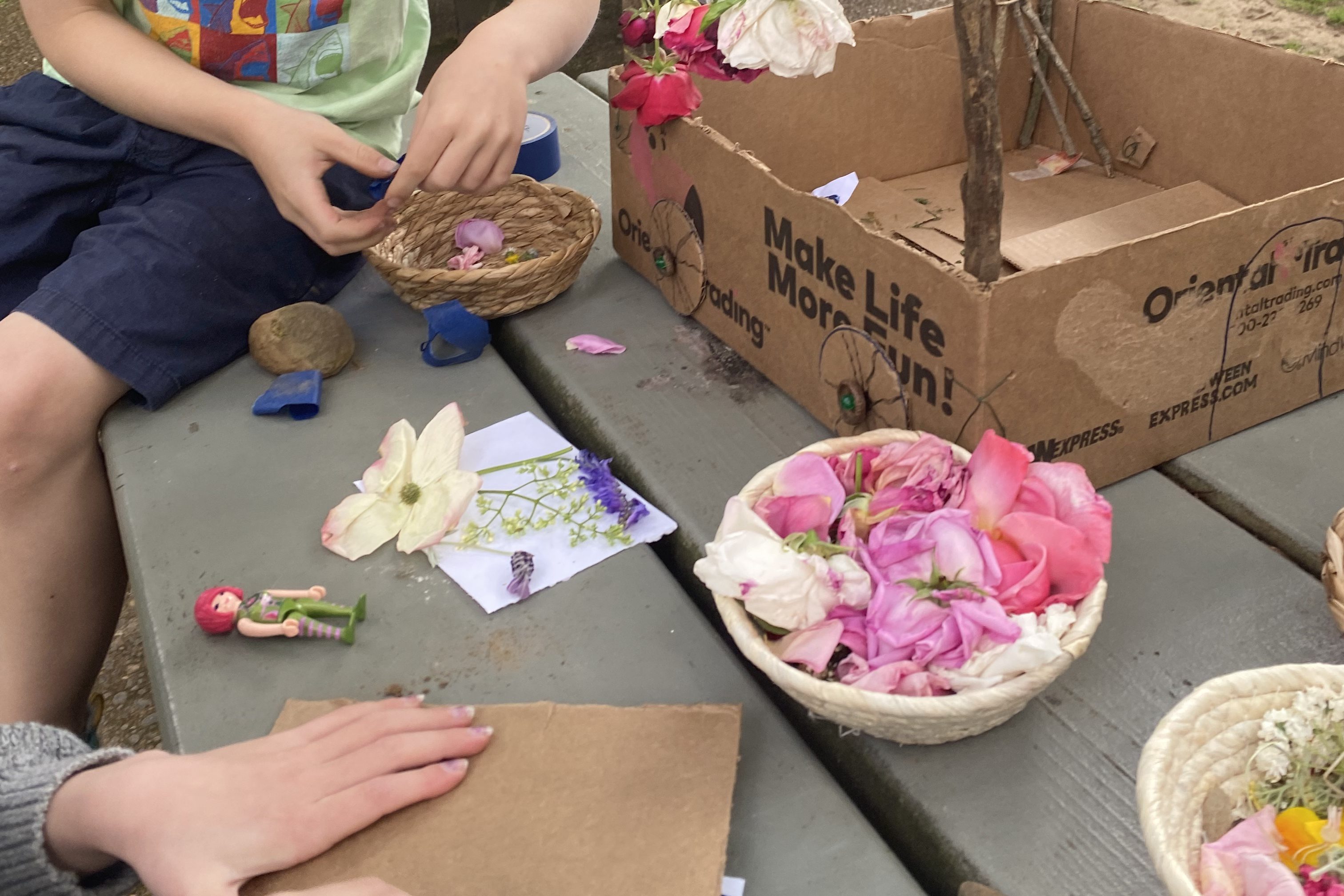
Every child has creative potential and every child is capable of expressing that creativity. At POE, we choose to focus on the process, not the outcome, of our projects and incorporate nature into our art with wildcrafts. We also offer traditional art, fiber arts, writing and storytelling, fuse beads, and air dry clay.

Responsibility, Accountability, and Trustworthiness
Older students who have been with us for an extended period have the opportunity to become “Student Staff.” These students are invited to help run the student store, take point on hiking excursions, and assist in setting up activities. Students of all ages are taught how to maintain their own gear, clean up after themselves, learn when and how to ask for help, practice safety, and practice the seven principles of Leave No Trace.
*DISCLAIMER*
At this time, Portland Outdoor Explorers is NOT a licensed occupational therapy group, nor do we offer occupational therapy or related services.
 Portland Outdoor Explorers